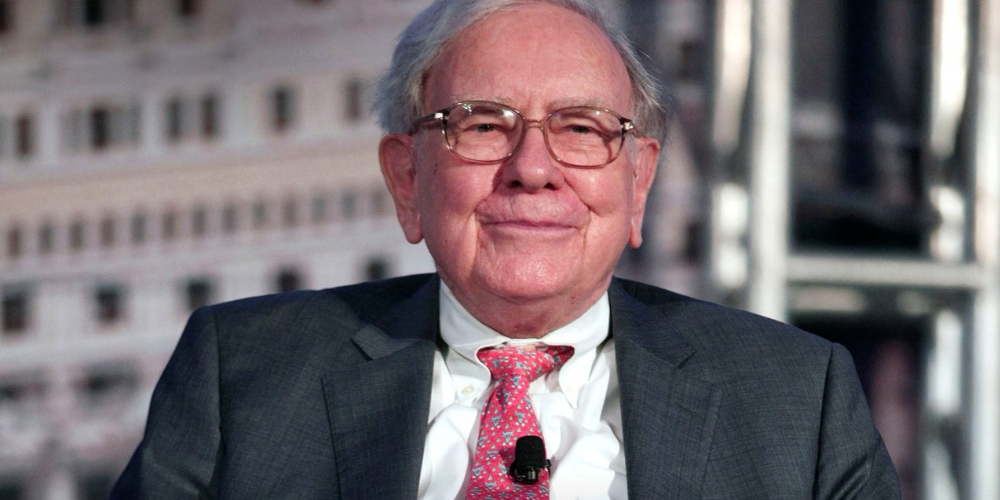
The artificial intelligence boom has pushed semiconductor and technology stocks to lofty levels, but former Bridgewater Associates executive and Unlimited CIO Bob Elliott believes investors may be expecting far more than the economy can realistically deliver.
He describes the current market as an “expectations mania,” driven by unusually high earnings forecasts, heavy AI spending and assumptions about productivity that have little historical precedent.
Earnings Forecasts Face a High Bar
Analysts currently expect companies tied to the AI boom to deliver roughly 25% annual earnings growth for the next five years. Elliott says that would create the strongest five-year earnings expansion by a wide margin in the post-World War II era.
The challenge becomes clearer when revenue and profit margins are separated. Even with nominal sales growth of 10% a year, companies would need to expand margins by about 1 to 1.5 percentage points annually to reach 25% earnings growth.
Elliott argues that higher corporate margins must come from somewhere. They can reflect lower labor costs, cheaper inputs or reduced financing expenses. If labor receives a smaller share of economic output, however, households may have less income available for spending.
That creates another assumption: consumers would need to keep spending while saving less.

Instagram | the_mainstreamofficial | Analysts expect AI-linked firms to deliver a historic 25% yearly earnings expansion through the next five years.
The Productivity Assumption
Elliott also questions the productivity gains needed to support current AI valuations. He points to a scenario involving 2% inflation and 10% nominal economic growth. That would imply 8% real growth.
With a labor force that is not growing, the economy would need roughly 8% productivity growth to produce that result.
“On a zero-growing labor force, that’s 8% productivity growth,” Elliott said. “To be clear, that has never happened in any economy in history.”
The point is not that AI cannot improve productivity. Instead, the concern is the scale required to justify current market expectations.
A $5 Trillion AI Spending Question
Elliott has also examined a scenario involving roughly $5 trillion in AI investment over five years. He argues that investors can work backward from that spending level to estimate the enormous revenue and productivity gains required to make the investment economically attractive.
Current annualized AI revenue, by comparison, stands at roughly $130 billion to $150 billion, according to Elliott.
The gap is substantial. AI would eventually need to generate a multitrillion-dollar annual revenue stream to support investment at that scale.
The industry also has tightly connected financial relationships. Microsoft Corporation (NASDAQ: MSFT) benefits from cloud demand linked to OpenAI, while OpenAI remains loss-making. NVIDIA Corporation (NASDAQ: NVDA), Microsoft, Alphabet Inc. (NASDAQ: GOOG) and AI model developers are connected through investments, contracts and computing demand.
Elliott compared the structure with the interconnected banking system before the financial crisis.
“In the financial crisis, one of the things that really brought down the whole banking system was that everyone was connected with everyone else,” he said. “The problem is we’ve basically recreated a similar type circumstance.”
The Real Economy Still Matters

Instagram | fnlondon.com | Elliott stresses that AI companies must sell to traditional non-tech industries to generate true economic demand.
For Elliott, the biggest test is whether AI revenue eventually comes from businesses and consumers outside the technology sector.
“Ultimately, there has to be Kellogg’s,” Elliott said. “You can’t just have OpenAI talking to Microsoft, talking to NVIDIA, talking to Google.”
His argument centers on the source of final demand. Technology companies can sell services to one another, but sustainable revenue must ultimately connect with the broader economy.
Elliott also questions whether hyperscaler capital spending alone can drive U.S. economic growth. Annual AI-related spending of $600 billion to $700 billion would equal about 2% of U.S. GDP. In addition, many high-value components are imported from Taiwan and South Korea.
Household consumption remains a larger economic force. Elliott says income is growing around 3.5%, while consumption is increasing 6% to 7%. That gap suggests households are continuing to reduce their savings.
He estimates that a current savings rate near 3% would need to fall to roughly -15% over five years to sustain the spending pattern.
What Elliott Sees Beyond AI
Elliott says semiconductor investments have become crowded among retail investors, hedge funds and leveraged vehicles. He therefore favors assets that may offer diversification if expectations around AI weaken.
His areas of interest include inflation-protected Treasury securities with roughly 3% real yields, gold through physical ETF exposure and value opportunities in Europe, Japan and biotechnology.
Elliott’s warning does not depend on AI failing. Instead, it focuses on the extraordinary economic performance already reflected in many stock prices. Sustaining those valuations could require exceptional earnings growth, major productivity gains, continued household dissaving and massive AI revenues.
The central question is whether the real economy can grow fast enough to support the expectations now built into the AI trade.