Robinhood is pushing deeper into private markets with its second publicly traded venture fund. Robinhood Ventures Fund II, known by its ticker RVII, began trading on the New York Stock Exchange on August 13, 2026. The fund gives ordinary investors a way to gain exposure to startups that usually attract venture capital firms and wealthy backers.
That idea sounds simple, but it marks a notable shift in access to private companies. Most retail investors cannot easily buy stakes in young startups before they reach the public markets. RVII packages investments in dozens of private businesses into a fund whose shares can trade on the NYSE.
The launch also shows how Robinhood wants to expand beyond its familiar stock and crypto trading business. The company is betting that retail investors want access to private companies much earlier in their development. There is plenty of risk attached to that opportunity. Early-stage startups can grow quickly, but many fail or struggle to produce returns. RVII gives investors easier access to venture capital. But it does not remove the risks that come with investing in young private companies.
RVII Takes Robinhood Deeper Into Early Stage Startups
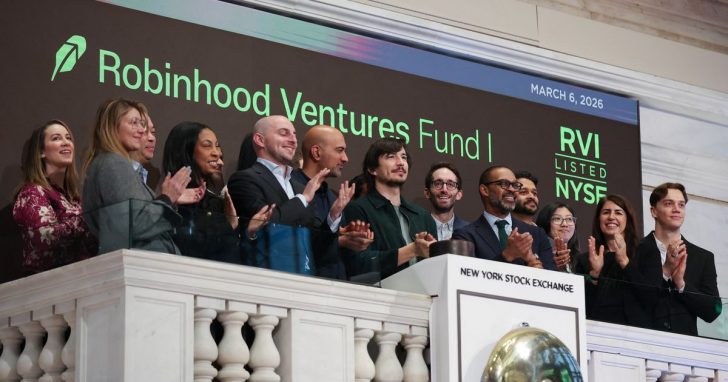
GTN / RVII priced its initial public offering at $25 per share. The offering involved 8 million shares and gave the fund a total size of $225.5 million.
Underwriters also received an option to purchase another 1.2 million shares, which could increase the fund's size to as much as $255.5 million.
Trading did not begin at the $25 IPO price. RVII opened on the NYSE at $22.50, putting the shares 10% below their offering price at the start of public trading. More than 133,000 Robinhood customers invested through the IPO, according to Barron's.
Robinhood's second venture fund differs from its first in an important way. RVII concentrates on companies at earlier stages of development. Robinhood says the fund plans to invest in early and growth-stage private companies with strong growth potential. The fund's existing investments show how early Robinhood is willing to go. During the second quarter of 2026, RVII invested $10.25 million across 41 companies from Y Combinator's Spring 2026 batch. Each company received a $250,000 investment from the fund.
Y Combinator Sits at the Center of RVII
Yahoo Finance / Y Combinator plays a major role in RVII's investment strategy. The fund focuses on companies that currently participate in the startup accelerator, previously completed its program, or have founders who went through Y Combinator.
The accelerator has built a strong reputation since its launch in 2005. Robinhood says Y Combinator has funded more than 5,000 companies with a combined value above $1.3 trillion. Its alumni include more than 100 companies valued above $1 billion.
Some of the accelerator's best-known names include Coinbase, Reddit, OpenAI, Stripe, and DoorDash. Those successes help explain why Robinhood wants RVII positioned close to the Y Combinator startup network. Past winners, however, cannot guarantee similar results from the fund's newer companies.
RVII started with roughly 80 private companies and has continued adding investments. Robinhood's stock page recently listed 81 holdings, excluding money market funds and other cash equivalents. The portfolio is expected to change as managers deploy the money raised through the IPO.
Easy Access Comes With Serious Investment Risk
RVII is structured as a business development company, or BDC. This type of closed-end investment fund can trade publicly, allowing retail investors to buy shares without meeting the income and wealth requirements normally associated with accredited investors.
That structure makes the investment easy to access, but investors are buying shares in RVII rather than direct ownership in each startup. They cannot simply ask the fund to return their money whenever they choose. Investors who want to exit generally need to sell their RVII shares on the public market.