For decades, the 60/40 portfolio felt almost boring in the best possible way. Investors put 60% into stocks, 40% into bonds, rebalanced from time to time, and trusted the two sides to handle different market conditions.
That simple formula still has value, but its old reputation deserves a reality check in 2026. Stocks have become heavily concentrated, bonds do not always protect against equity losses, and inflation can hit both sides of the portfolio at once.
The clearest warning arrived in 2022, when stocks and bonds suffered together. That year challenged the assumption that bonds would reliably rise when stocks fell. It showed that diversification based on two asset classes can break when both react to the same economic shock.
Conditions have improved since then, and bonds have recently regained some of their defensive power. Morningstar found that the correlation between U.S. stocks and bonds was only 0.11 from the start of 2025 through mid-2026, compared with 0.66 during 2022. That is important because the 60/40 portfolio is not useless. It is simply less dependable as a complete solution.
The Stock Side Is Less Diversified Than It Looks

Lee / Pexels / Owning an S&P 500 fund can feel extremely diversified because the index contains more than 500 companies. The problem is that not every company carries the same weight.
As we speak, the ten largest companies represented about 37.8% of the S&P 500. One company alone accounted for more than 8% of the index. That means a surprisingly large share of investor returns depends on a relatively small group of giant businesses.
Artificial intelligence has made that concentration even more visible. Large technology and AI-linked companies have driven a substantial part of recent market performance, which has rewarded investors while also creating a hidden concentration problem.
BlackRock reported in April that the ten largest S&P 500 companies represented roughly 37% of the index, compared with 29% in 2020 and only 19% in 2010. That shift means investors can own hundreds of stocks while still depending heavily on a small group of market leaders.
The answer does not require abandoning U.S. stocks. It means looking beyond a market-cap-weighted index when building the equity portion of a portfolio.
Bonds Still Matter, but the Old Assumptions Do Not
The bond side of the 60/40 portfolio has changed too. For years, investors treated government bonds as natural protection against stock market declines because economic weakness often pushed interest rates lower and bond prices higher.
Inflation shocks complicate that relationship. When inflation remains stubborn, central banks may have less freedom to cut rates during a stock decline. Rising yields can then hurt bond prices while falling growth expectations pressure stocks.
BlackRock found that since 2020, bonds produced negative returns during 17 of the 19 months when equities fell by at least 2%. March 2026 provided another example as inflation worries pressured both sides of traditional balanced portfolios.
Still, writing off bonds completely would create another problem. Morningstar reports that bonds have once again helped reduce equity volatility through much of 2025 and 2026, showing that correlations can change quickly.
The important change is mental. A 40% bond allocation should not be treated as one giant safety bucket. Different bonds carry different risks, and the mix matters as much as the percentage.
Diversification Now Needs More Than Two Buckets
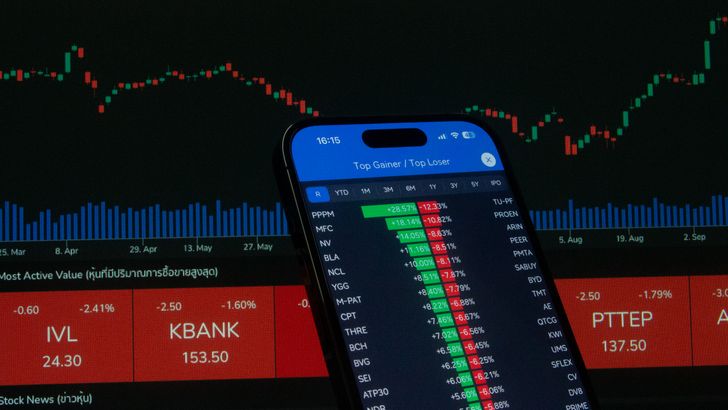
Stock Radars / Pexels / Industry experts argue that investors may need additional return sources beyond public stocks and traditional bonds.
That category can include managed futures, market-neutral strategies, commodities, infrastructure, real estate, private credit, and other assets. Each comes with its own risks, costs, tax issues, and liquidity limits, so adding alternatives simply because they sound sophisticated can create new problems.
Managed futures are especially interesting because they can take positions based on market trends rather than relying on stocks to rise. They can potentially benefit from sustained moves in equities, bonds, currencies, and commodities.
Some investors are also exploring a 60/20/20 structure. Instead of holding 60% stocks and 40% bonds, the portfolio might hold 60% stocks, 20% bonds, and 20% in diversifying strategies.