Modern life often comes with a hidden environmental cost. Larger homes, higher energy use, fast fashion, and constant consumption have improved comfort for many people, but they have also placed increasing pressure on the planet's natural systems.
As climate change, biodiversity loss, and resource shortages become more visible, a growing question has emerged: Is it possible for everyone to enjoy a good quality of life without exhausting Earth's resources?
Researchers believe the answer depends less on sacrificing comfort and more on changing how societies produce, consume, and share resources. Instead of encouraging endless consumption, many experts now support a model that balances human well-being with environmental responsibility.
One city drawing global attention for putting these ideas into practice is Guimarães, Portugal. Through long-term planning, community participation, and practical environmental policies, the city has become an example of how sustainability and quality of life can work together.
Why Planetary Boundaries Matter
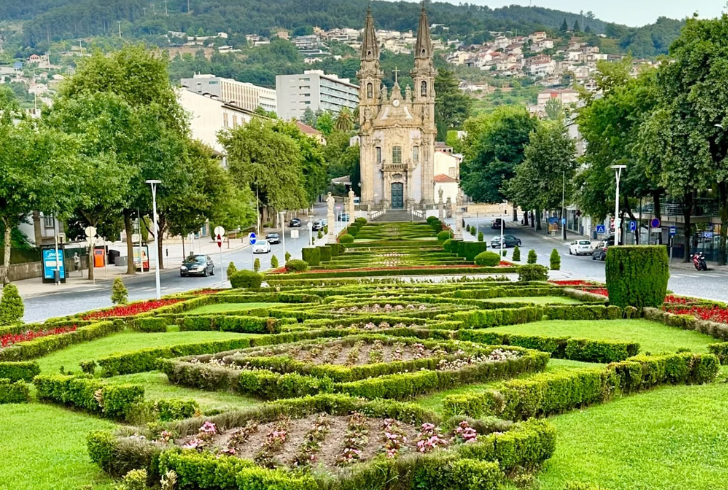
Instagram | wiki.ruisenores.alborotadores | Through practical green policies, Guimarães seamlessly blends eco-sustainability with livability.
The discussion around sustainable living gained momentum after Earth system scientist Johan Rockström of the University of Potsdam and fellow researchers introduced the concept of planetary boundaries in 2009. Their study identified nine environmental limits that help keep Earth stable for human civilization. These boundaries include climate change, freshwater availability, land use, ocean acidification, and biodiversity loss.
Scientists warn that humanity has already crossed seven of these nine boundaries, largely because of the rapid increase in resource consumption over the last several decades. Energy demand continues to rise, while the extraction of raw materials has nearly tripled compared to previous generations. Domestic water use has also increased dramatically, growing about six times over the past 50 years.
These patterns raise concerns because natural resources are being used faster than ecosystems can recover. If consumption continues at the current pace, environmental damage could become increasingly difficult to reverse.
Challenge Beyond Population Growth
Many discussions about sustainability focus on the world's growing population. Research suggests the larger issue is not simply how many people live on Earth, but how unevenly resources are consumed.
A 2025 study led by sustainability scientist Joel Millward-Hopkins from the University of Lausanne examined global trends in energy and material use. The research separated countries into two broad groups: those still working to provide residents with decent living standards and those already consuming more resources than necessary.
The findings revealed a striking imbalance. Wealthier countries already use significantly more energy and materials than lower-income nations. More importantly, resource consumption continues to increase much faster in countries that already have a surplus. According to the researchers, consumption growth in these nations is roughly four times higher than in countries that still need additional resources to improve living conditions.
Millward-Hopkins warned that if these patterns continue, many lower-income nations may not reach decent living standards until the end of the century while environmental pressures continue to increase worldwide.
Redefining What "Enough" Means
Many sustainability experts support the idea of sufficiency instead of endless growth. This approach does not mean giving up a good quality of life. Instead, it asks a simple question. Does buying or using more always make life better after basic needs are met?
Researchers say people need safe housing, healthy food, healthcare, education, transportation, and financial security to live well. Once these needs are met, extra material goods often add little to daily happiness. Joel Millward-Hopkins calls this pattern "useless overconsumption." It happens when people use more resources without gaining meaningful improvements in their lives. At the same time, this extra consumption puts greater pressure on the environment.
To address this issue, researchers introduced the idea of a consumption corridor. The goal is to strike a healthy balance. Everyone should have enough resources to live comfortably. At the same time, society should keep overall consumption within Earth's environmental limits.
Guimarães Sets an Ambitious Goal
Located in northern Portugal, Guimarães has become one of Europe's most closely watched examples of sustainable urban planning. Known for its medieval history and cultural significance, the city has spent the past decade reshaping local policies around environmental responsibility without losing sight of residents' everyday needs.
Biologist Carlos Ribeiro, who leads the city's Landscape Laboratory, says social fairness remains central to every decision. The goal is not simply to reduce environmental impacts but also to ensure that no community is left behind during the transition.
Several years ago, sustainability scientist Sara Pires from the University of Aveiro and her research team evaluated the city's ecological footprint. Their analysis produced a concerning result. If every person on Earth consumed resources at the same rate as residents of Guimarães at that time, humanity would need the equivalent of 2.3 Earths to support that lifestyle. By comparison, the global average stood at approximately 1.7 Earths.
Those findings encouraged city leaders to pursue a new direction. Guimarães committed to becoming a One Planet City by 2050, a designation developed by Bioregional and the World Wildlife Fund to encourage communities to live within the planet's available resources.
Building a More Circular Economy
Meeting that goal required more than environmental campaigns. City officials began introducing practical policies that encouraged residents and businesses to reduce waste while extending the life of valuable materials.
One example is the city's pay-as-you-throw waste collection system, which charges households based on the amount of non-recyclable waste they produce. Recycling trucks carrying messages about saving money through recycling have become a familiar sight across local neighborhoods.
Repair fairs have also become popular community events. Instead of replacing damaged electronics, appliances, and household goods, residents are encouraged to repair them. These efforts reduce unnecessary waste while helping families save money.
The results have been encouraging. Guimarães now reports a waste circularity index approximately 2.5 times higher than Portugal's national average, reflecting stronger reuse, recycling, and material recovery throughout the local economy.
The city's long-standing textile industry has also found a new direction. Businesses including RDD Textiles and Zouri Shoes have adopted more sustainable production methods by using recycled materials and natural dyes. Every year, more than 20 tons of textiles are recovered through local collection and recycling efforts, reducing landfill waste while supporting a more resource-efficient manufacturing system.
Nature as Part of the Solution
Environmental improvements in Guimarães extend well beyond waste management. The city's Landscape Laboratory, established in 2014 in partnership with the University of Minho and the University of Trás-os-Montes e Alto Douro, studies ways to improve residents' quality of life while lowering environmental impacts.
Since 2012, approximately 95 hectares of green space have been restored throughout the city. Historic areas surrounding Guimarães Castle now feature rain-fed meadows instead of heavily maintained lawns, while green corridors connect neighborhoods and encourage walking and cycling.
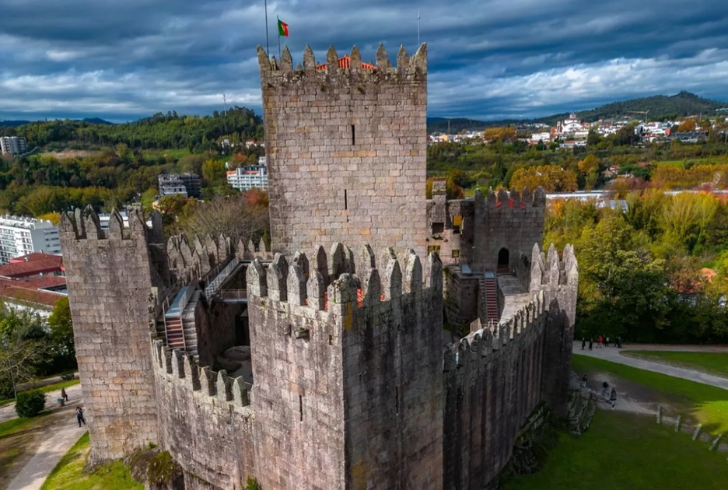
Instagram | castles_and_palaces | Guimarães transformed its historic grounds into natural meadows and neighborhood-connecting paths.
These investments provide several benefits at once. Additional vegetation helps cool urban areas during hot summers, reducing the demand for air conditioning. Green spaces also improve wildlife habitats, increase outdoor recreation opportunities, and encourage residents to spend more time in nature instead of relying on resource-intensive activities.
Research published in 2020 by environmental psychologist Yannick Joye of Vilnius University found that people who pay greater attention to natural surroundings often place less value on material possessions. That finding suggests well-designed public spaces may influence consumer behavior while also improving physical and mental well-being.
Part 2 will cover community involvement, climate resilience, social tipping points, wealth inequality, the Global Justice Report, Guimarães' remaining challenges, its recognition as the 2026 European Green Capital, and a concluding section on what other cities can learn from its experience.
Community Participation Drives Change
Large environmental goals rarely succeed without public support. Guimarães has made community involvement a central part of its sustainability strategy by encouraging residents to contribute ideas instead of simply following government policies.
According to Carlos Ribeiro, the Landscape Laboratory regularly invites citizens to help shape local environmental projects. A recent public call generated 200 proposals, and about 150 have already been put into action. These projects include new walking trails, outdoor cultural events, neighborhood improvements, and activities that connect people with nearby green spaces.
Environmental education also plays a major role. Volunteer groups known as "green brigades" organize tree planting, community cleanups, and biodiversity surveys. These activities encourage residents of all ages to participate directly in protecting their surroundings.
During Green Week, held each June in Guimarães, thousands of residents gather to learn about ecological restoration through workshops, educational displays, and creative activities. Ribeiro believes these events strengthen local identity while helping people understand how environmental improvements also make the city safer and healthier. As he explained, "It's very important to improve that sense of belonging, the sense of identity. It's a different approach to changing some mindsets."
Preparing for Climate Risks
The city's investments are designed not only to reduce resource use but also to prepare for increasingly severe weather.
Portugal has experienced stronger heatwaves and heavier rainfall in recent years. To reduce flood risks, Guimarães built floodwater retention basins that combine wetlands, meadows, and engineered barriers. These systems temporarily store excess water during intense storms before releasing it gradually.
The value of this infrastructure became clear during the heavy storms that struck Portugal in January. The floods claimed at least 16 lives and forced thousands of people to leave their homes. Many communities experienced severe flooding. However, the retention basins in Guimarães held back large volumes of water and reduced local damage.
The city's growing network of green spaces also lowers urban temperatures during summer. These areas reduce the need for energy-intensive air conditioning. They also create more comfortable neighborhoods for residents.
Changing Habits Remains a Challenge
Building environmentally friendly infrastructure is often easier than changing everyday behavior.
Earth system scientist Tim Lenton from the University of Exeter describes widespread shifts in public attitudes as social tipping points. These occur when enough people adopt new behaviors, allowing broader societal change to accelerate on its own.
Guimarães offers several examples of this process. Repairing household items instead of replacing them, choosing public spaces over shopping-centered activities, and supporting local circular businesses have gradually become more common across the city.
Local business owner Sandra Freitas, who operates a vegetarian café, believes attitudes have evolved over time. She says residents increasingly value community well-being over unnecessary consumption. As Freitas explained, "We don't need too much food in our freezer or too much money in our pockets, and we don't need to have 10 cars." She also noted that residents continue looking for ways to improve the city each year.
Even with growing public support, transportation remains one of the city's toughest challenges. Guimarães is among Portugal's wealthier municipalities, and many residents continue driving despite higher fuel prices and improved public transportation. According to Ribeiro, changing daily habits remains one of the most difficult parts of the transition.
How Wealth Drives Consumption
Research shows that higher income often leads to greater environmental impacts. This pattern appears even among people who strongly support environmental protection.
A recent study examined the wealthiest 30 percent of the population. It found that people who expressed the strongest environmental concerns often had larger ecological footprints than others in the same income group.
Joel Millward-Hopkins argues that financial security allows many wealthy people to maintain high levels of consumption, even when prices increase. He recalled a cycling trip shortly after Russia invaded Ukraine, when fuel prices rose sharply across Europe. During the trip, he watched a convoy of luxury sports cars drive past. Each car carried only one driver. The experience showed that higher fuel prices had little effect on the consumption habits of the wealthiest individuals.
Millward-Hopkins believes the debate should focus less on limiting quality of life and more on expanding access to essential services. He says reliable healthcare, quality education, affordable housing, nutritious food, and stable employment improve people's lives far more than additional material consumption.
As he explained, "All of these things can be provided to all without exceeding ecological limits, if we can direct our labour towards things that matter, not just what's profitable."
The Global Justice Report
The connection between environmental sustainability and economic inequality was also highlighted in the Global Justice Report, published by the World Inequality Lab in June.
The report argues that reducing inequality could play an important role in addressing climate change. Among its recommendations is a global wealth tax on billionaires to help finance cleaner energy systems while increasing investment in education and healthcare.
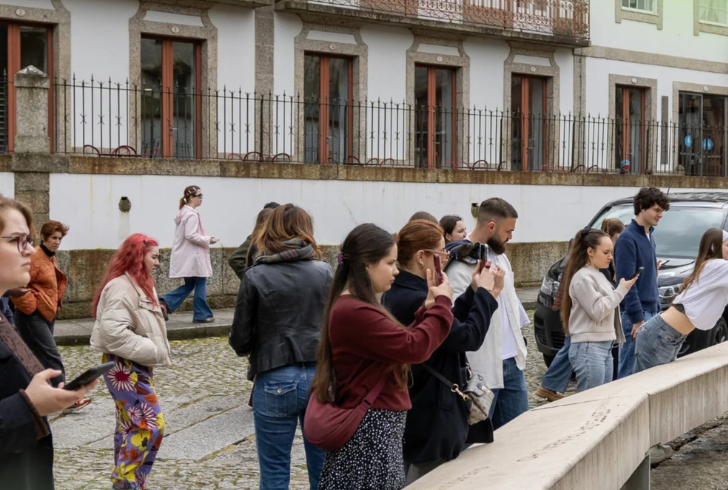
Instagram | futuro.em.rede | Guimarães' Bairro C innovation district has become an internationally recognized hub for zero-carbon tech.
According to Cornelia Mohren, environmental coordinator at the World Inequality Lab, "The climate crisis and inequality are very much intertwined. We think that it's necessary to make those pay who caused the climate crisis, which are the global rich."
The report also discusses shorter working hours and dietary changes as ways to reduce resource consumption. Despite proposing significant economic adjustments, the researchers estimate that average global income could still reach approximately €5,000 per month per person by the end of the century. Mohren describes the report as a vision for what may be possible rather than a strict policy roadmap.
Progress That Other Cities Are Watching
Although Guimarães has not solved every challenge, the city has made measurable progress over the past decade. Since 2018, household waste generation has fallen by 18 percent. This achievement stands out at a time when waste levels continue to rise in many parts of the world. Financial incentives for recycling, expanded biowaste collection, and stronger waste reduction programs now benefit most households.
The city has also expanded Bairro C, an innovation district linking Guimarães' historic areas, into a hub for zero-carbon technologies and sustainable economic projects. These initiatives have attracted international attention. In recognition of its progress, Guimarães was named the European Green Capital 2026 by the European Union.
Officials from Belgium, France, Italy, and Spain have visited the city to study its environmental programs. At the same time, the Landscape Laboratory has shared its research with policymakers in Brazil and several other countries.
Political leadership has changed during this period. Even so, the city's sustainability agenda has remained steady. Earlier administrations placed environmental commitments into local law. This step made long-term policies less vulnerable to future political changes. Sara Pires believes this legal framework provides lasting stability. As she explained, "It's almost impossible for a new mayor to come and destroy that."
Guimarães shows that environmental responsibility and a high quality of life can exist together. Its progress highlights the value of smart planning, efficient resource use, and strong community participation. These efforts have reduced environmental impacts while creating healthier and more resilient neighborhoods.
Experts continue to discuss how similar strategies can work in countries with different economic conditions. Even so, Guimarães demonstrates that meaningful progress is possible. Consistent action, public participation, and long-term planning can help communities move toward a more sustainable future.