A startup promising to modernize agriculture with artificial intelligence and electric machinery once captured the imagination of investors. The company, Monarch Tractor, attracted hundreds of millions of dollars by presenting a bold idea: a self-driving electric tractor designed to work vineyards and farms without human drivers. Investors believed the technology could reshape farming through automation and clean energy.
The vision sounded convincing. The funding followed quickly. Yet the story recently took an unexpected turn when a California winemaker posted a blunt video review that quickly spread across social media.
The clip showed a very different reality from the one investors and industry watchers once imagined.
Startup That Promised to Change Farming
View this post on Instagram
Founded in California’s Bay Area, Monarch Tractor positioned itself as a company ready to introduce AI-driven automation into agriculture. Its electric tractor was designed to operate autonomously through vineyards and fields.
The machine aimed to perform tasks such as navigating crop rows without a driver, removing weeds without chemicals, and running on electric power instead of diesel.
The concept gained attention across the technology and agriculture sectors. Recognition soon followed.
The tractor was listed among the best inventions of the year by Time Magazine in 2023. Meanwhile, Forbes discussed the possibility of the company reaching a billion-dollar valuation.
Investor confidence pushed the startup’s paper valuation to about $518 million. Earlier funding rounds had already secured roughly $240 million from investors who believed the machines could introduce a new era of automated farming.
For a while, the company appeared to represent the future of agricultural technology.
A Vineyard Test That Told a Different Story
The public narrative shifted after a viral Instagram video appeared online. The clip came from California winemaker Patrick O'Connor, who had spent three years testing the Monarch tractor on steep vineyard terrain.
The video gathered nearly 550,000 views, largely because of O’Connor’s direct and unfiltered verdict.
“It totally failed.”
The statement summarized years of testing in a single sentence. The tractor had been evaluated under real working conditions, yet the results were far from the automation promise that originally attracted investors and farmers.
Mechanical Issues and Automation Problems
O’Connor described several operational problems during his evaluation period. The issues appeared frequently enough to raise serious doubts about the system’s reliability.
The most notable concerns included hydraulic failures and inconsistent automated navigation. The tractor’s row-following system, which was meant to guide the vehicle through vineyard rows, repeatedly struck grapevines instead.
Autonomous driving also created safety concerns. According to O’Connor, the machine’s behavior in self-driving mode was unpredictable enough that he avoided having other people nearby when the feature was active.
A machine designed to reduce human involvement required constant supervision instead.
The autonomous capabilities promoted in marketing materials never fully reached the expected level. Farmers expected a driverless system. What arrived felt unfinished.
The video prompted reactions from several people connected to the company, including co-founder Carlo Mondavi.
Mondavi, from the well-known Napa Valley wine family, had already left Monarch Tractor roughly a year earlier due to internal disagreements.
In a public comment on the viral video, Mondavi acknowledged the product issues and apologized. He described the tractors as having “real first-gen challenges” and said farmers should not have carried the burden of those early problems.
The statement recognized the issues but also highlighted a difficult reality for early adopters who expected reliable equipment.
A $100,000 Tractor With Limited Practical Use
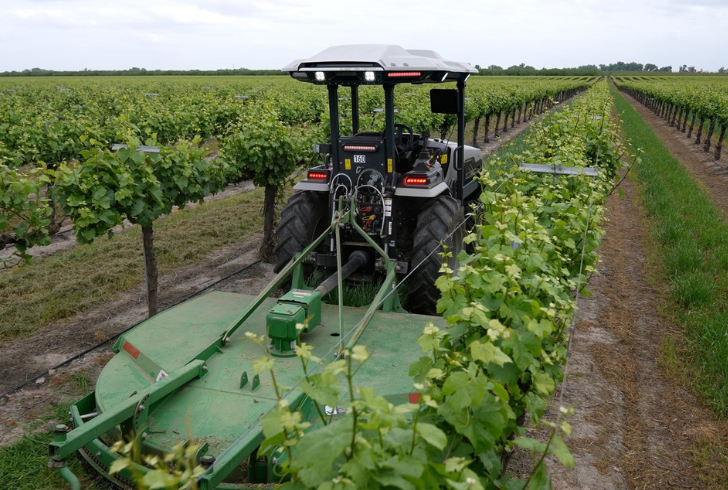
Instagram | monarch_tractor | Despite subsidies covering up to 85% of the $100,000 price, Monarch tractors remain a heavy financial lift for farmers.
The financial side of the situation raised even more attention.
Monarch tractors carried price tags reaching $100,000 per unit. Government subsidies could reduce the cost significantly, sometimes by as much as 85 percent, depending on eligibility programs. Even with subsidies, the machines represented a major investment for farmers.
Reports also revealed additional complications. Several tractor dealerships filed lawsuits against Monarch Tractor, claiming the company delivered defective equipment. In at least one case, the startup’s legal team withdrew from representation after concerns emerged regarding unpaid legal fees.
Meanwhile, operational changes began to signal deeper financial trouble.
The company vacated its headquarters in Livermore, laid off most of its workforce, and warned that a complete shutdown remained possible. Hundreds of millions of dollars from investors and government funding had already been spent.
Despite the harsh review, the vineyard owner did not abandon the equipment entirely. The tractor still performs a few practical tasks.
According to O’Connor, the machine now functions mainly as a mobile generator and a wood-splitting tool. Those roles remain reliable, though the price tag makes the situation hard to ignore. A six-figure agricultural robot now performs jobs that basic equipment would otherwise handle.
The viral video highlighted the contrast between expectation and outcome more clearly than any technical report.
The Future of AI in Agriculture
The failure of one startup does not erase the potential of automation in farming. Electric equipment and artificial intelligence still hold promise for reducing emissions and improving agricultural efficiency.
Even O’Connor maintains that the broader idea remains valid. AI systems could help manage crops, reduce chemical use, and support more sustainable farming practices.
However, the Monarch case illustrates the risk of introducing complex technology into environments that demand reliability every day. Farms cannot pause operations while experimental machines struggle to perform basic tasks.
The rise and decline of Monarch Tractor reflects a familiar pattern in technology ventures. Large investments, strong media attention, and ambitious promises can quickly create excitement around a new product. Yet real-world performance ultimately decides whether the technology succeeds.
The company once carried a valuation of $518 million and received recognition from major publications. Today, its future remains uncertain, while a vineyard video continues circulating online as a reminder of what happened when expectations met reality.
For agriculture, the lesson is straightforward. Automation may shape the future of farming, but farmers depend on machines that work every day without hesitation. Until technology meets that standard consistently, skepticism will remain part of the conversation.