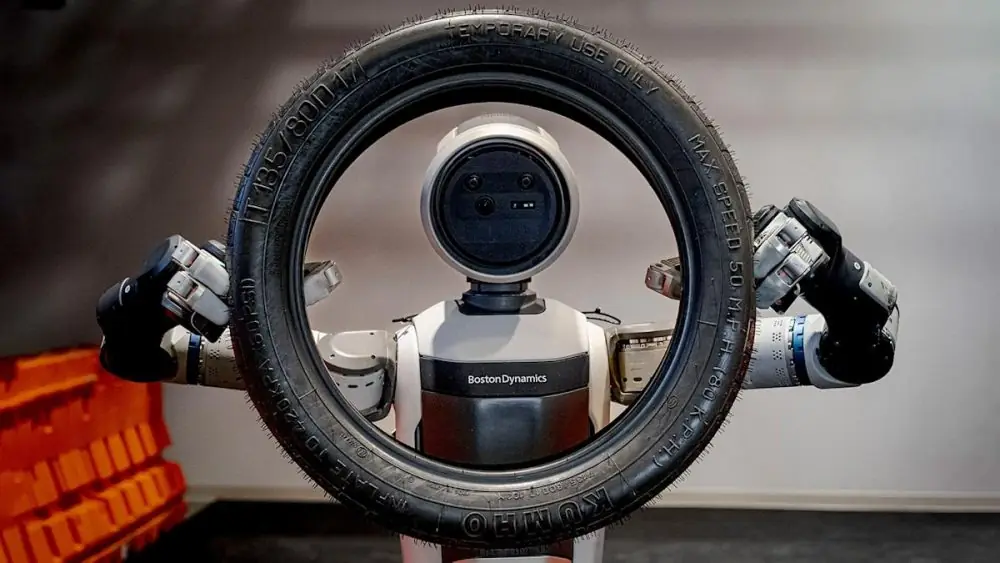
Hyundai is no longer just chasing electric cars. The company is now pouring $6.3 billion into artificial intelligence, robotics, and hydrogen energy to push ahead in the humanoid robot race. This move sets up a direct clash with Tesla and its Optimus robot.
The $6.3 billion investment, equal to 9 trillion won, is part of a much larger 125.2 trillion won domestic spending plan through 2030. Hyundai wants to build a powerful AI and robotics hub in South Korea. The goal is simple and bold, lead the shift from electric vehicles to what many now call physical AI.
The Brain Behind the Robots
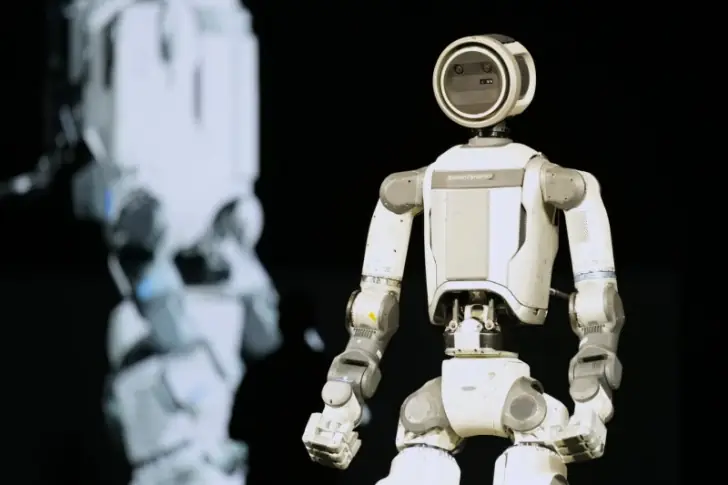
That data will train robots and vehicles to understand and react to the real world in real time.
However, Hyundai is not doing this alone. The company formed a partnership with Nvidia in October 2025 to create a national physical AI cluster. The new data center will act as the brain of the system, constantly feeding new information to machines like Atlas so they can learn faster and perform better.
Physical AI is not just software on a screen. It gives machines the ability to sense, move, and make decisions in real environments. Hyundai believes this technology will define the next wave of automation, and it wants to own a large piece of it.
The Factory is Built for 30,000 Robots a Year
Hyundai is also investing 400 billion won in its first robot manufacturing complex in South Korea. This fully automated factory will produce up to 30,000 robots a year. That includes wearable robots, industrial machines, and logistics systems.
The plan goes beyond building robots. Hyundai wants to create a full robotics supply chain in the region. The project is expected to generate about 71,000 new jobs and attract global partners, which could reshape the local economy.
Energy is another key part of the strategy. Hyundai will invest over 2 trillion won in clean energy, including a water electrolysis plant that produces 80 tons of green hydrogen daily. A large solar power plant will supply renewable energy to the AI and robotics hub, lowering emissions and operating costs at the same time.
Atlas vs. Optimus
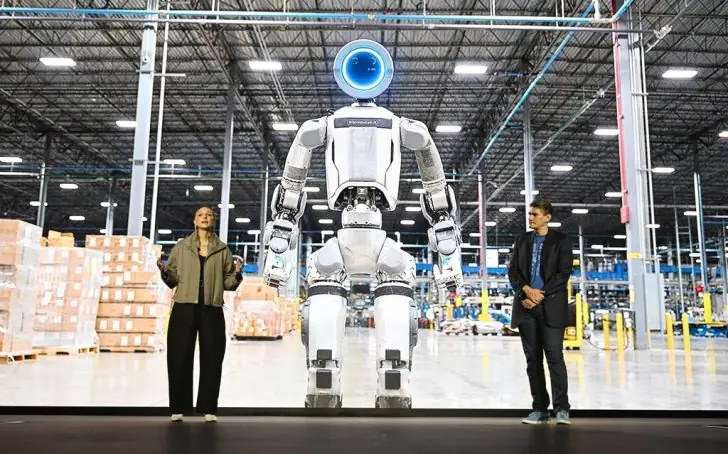
Atlas stands out for its strength. It can carry up to 50 kilograms, about 110 pounds. That is more than double the roughly 20-kilogram capacity reported for Tesla’s Optimus. Atlas also features human-scale hands with tactile sensors and joints that rotate fully, allowing it to work in tough industrial conditions from minus 20°C to 40°C.
Tesla’s Optimus, developed by Tesla, Inc. under the leadership of Elon Musk, aims for a different path. Musk has said Tesla could eventually produce 1 million Optimus robots annually. That kind of scale would change the market overnight.
Hyundai, in contrast, is starting inside its own factories. The company plans to deploy Atlas in its U.S. Metaplant in Georgia by 2028. The robots will first handle repetitive, high-volume tasks such as sorting and moving vehicle parts.
By 2030, Hyundai wants the Atlas to take on more complex assembly jobs. Over time, the company expects the robot to handle heavy lifting and dangerous tasks across all its production sites. This approach reduces risk and allows Hyundai to test and refine the technology before selling it widely.
Pricing reveals a clear difference in strategy. Early estimates suggest Atlas could launch between $130,000 and $140,000 per unit. If annual production reaches 30,000 units, that price could fall to around $35,000.
Tesla is aiming lower from the start. Musk has suggested a target price between $20,000 and $30,000 for Optimus.